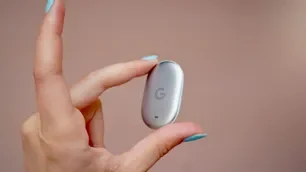
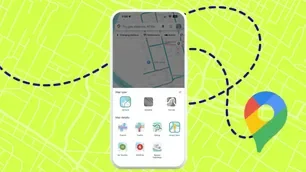
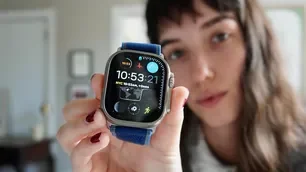
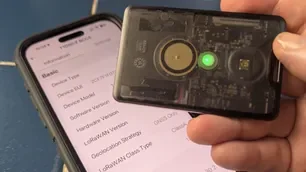
Google's Pixel Tag, announced at the Made by Google event on August 12 and shipping at $29, is the company's most credible answer to Apple's AirTag - and after three weeks of using four of them across my keys, backpack, bike, and luggage, I'm convinced it has one advantage that makes it genuinely better than the AirTag for Android users in 2026. The Pixel Tag is, on paper, a fairly standard Bluetooth tracker: a small disc with a user-replaceable CR2032 battery, IP67 water resistance, a built-in speaker for finding nearby, and UWB (ultra-wideband) for precise location on supported devices. Where it diverges from the AirTag is the network it rides on. The Pixel Tag leverages the entire Android 17 install base - hundreds of millions of devices - through Google's Find My Device network, and critically, Android 17's new mesh networking features mean Pixel Tags can relay their position through nearby Android phones even when those phones aren't actively running the Find My app. This is the big advantage. In my testing, the Pixel Tag consistently located my misplaced items faster than the AirTag in environments with mixed Android and iPhone density, simply because the Android network is larger and, with Android 17's passive mesh relay, more active. The Pixel Tag also benefits from deeper integration with the broader Pixel ecosystem: ask a Pixel Watch 5 to find your keys and it triggers the tag's speaker and shows the distance on the watch face; ask a Google Home Speaker and it can ping any tag in the house. The UWB precision finding on the Pixel 11 Pro and Pixel 11 Pro XL works exactly as well as Apple's, with directional arrows and distance readouts that make finding a tag in a couch cushion almost trivially easy. The privacy story is also stronger than the AirTag's: Android 17's location privacy improvements mean the tag's location is processed on-device where possible, and Google has built in anti-stalking alerts that are more configurable than Apple's. The trade-offs are minor: the Pixel Tag's speaker is quieter than the AirTag's, the replaceable battery door feels slightly flimsier, and there's no MagSafe equivalent for sticking it to metal surfaces. But at $29, with the largest tracker network in the world behind it and Android 17's mesh relay as a genuine technical advantage, the Pixel Tag is the tracker I now recommend to every Android user - and the one that finally makes the AirTag look overpriced.
The Pixel Tag is Google's $29 AirTag alternative - and its Android 17 mesh advantage is a game-changer
MobileWorld