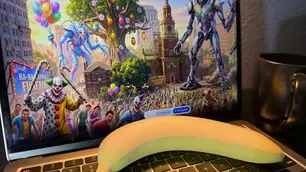
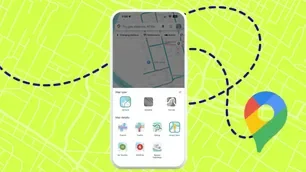
When Google Earth added the Nano Banana update this month, powered by the same Gemini models driving the Pixel 11 launch and the new Gemini 3.7 Flash, I did what any reasonable person would do: I immediately reimagined my hometown of Philadelphia as a post-apocalyptic wasteland overrun by zombies and evil clowns. The results were equal parts terrifying and hilarious, and they highlight just how far AI-assisted creative tools have come in 2026. Nano Banana, for the uninitiated, is Google Earth's new generative overlay system, and it lets you describe virtually any scenario in natural language and have Gemini render it across real-world geography. Want to see what your city looks like flooded by rising sea levels? Done in seconds. Curious how a zombie outbreak would spread through your neighborhood's actual street grid? Nano Banana can model that with eerie accuracy, complete with movement patterns and safe zone calculations. The zombie version of Philly I created was unsettlingly detailed: Gemini understood the difference between Center City's dense blocks, which became overrun almost immediately, and the wider streets of South Philly, where the simulation gave survivors more time to escape. The evil clown variant was less scientifically useful but significantly more traumatic, especially when Gemini placed them emerging from the actual circus tent location near the sports complex. What makes Nano Banana more than a novelty is its underlying technology: the same Gemini models that now hold 27.7% of the AI market and power features like Ask Maps and the Pixel 11's sign-to-text ASL translation. The creative potential is enormous: urban planners are using it to visualize development scenarios, educators are building immersive history lessons, and disaster response teams are running simulation drills on real geography. Yes, I mostly used it to populate the Liberty Bell with zombies, but beneath the absurdity is a genuinely powerful tool that shows how AI is transforming even the most utilitarian software into something creative, exploratory, and unexpectedly fun.
Google Earth's Gemini Nano Banana update let me reimagine Philly with zombies, and it's a wild glimpse of 2026 AI
SmartDevice