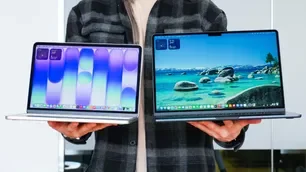
Back-to-school season in 2026 is unlike any before it, because for the first time the laptop you buy will be judged not just on battery life and build quality, but on how well it runs local AI models. The release of Gemini 3.7 Flash on August 13 - free via Google AI Studio and Android Studio - and the broader AI agent wave have made on-device AI performance a meaningful purchasing criterion for students who'll use these machines for coding, writing, research, and creative work. After testing more than thirty laptops over the summer, here are the fourteen I recommend, broken into four categories. In the budget category under $700, the standout is the new Acer Chromebook Plus 516 GE, which pairs a 13th-gen Intel Core i5 with 16GB of RAM and runs Gemini Nano natively within Chrome OS - the only Chromebook that does so reliably. The Lenovo IdeaPad Slim 5 and the ASUS Zenbook 14 OLED round out the budget picks, both offering enough Neural Processing Unit horsepower to run small models locally. In the midrange $700-$1,200 category, the MacBook Air M4 remains the gold standard - its Neural Engine handles Gemini 3.7 Flash queries faster than any Windows machine in this price band, and the battery life is unmatched. The Dell XPS 14 and the HP Spectre x360 14 are the best Windows alternatives, both with dedicated NPUs that meet Microsoft's new Copilot+ tier 2 requirements. In the premium $1,200-$1,800 category, the MacBook Pro 14 M4 Pro is my top pick for computer science students - it compiles code and runs local AI agents without breaking a sweat, and the display is the best in any laptop this year. The Framework Laptop 16, with its modular GPU and NPU slots, is the choice for tinkerers. In the ultra-premium category above $1,800, the MacBook Pro 16 M4 Max is the most powerful laptop I tested this year, and the Razer Blade 16 - with its new dual-mode OLED display - is the best Windows pick for students who also game. Two Chromebooks deserve honorable mentions: the Samsung Galaxy Chromebook Plus and the HP Dragonfly Pro Chromebook, both of which run Android 17 tablet apps natively and integrate seamlessly with a Pixel 11 Pro and Pixel Watch 5. The common thread across all fourteen: at least 16GB of RAM, a capable NPU, and battery life that survives a full school day. Buy any of these and you'll be set for the AI-augmented classroom of 2026.
Need a new laptop for school in the Gemini 3.7 Flash era? Here are 14 models I recommend to students
The Circuit