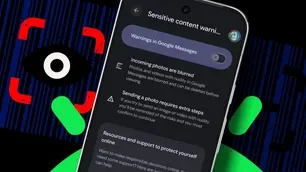
Buried inside Android 17, which hit stable rollout on June 16, 2026, is a feature that almost no Pixel 11 owner knows exists: a silent, always-on scanner that examines every photo on your device for what Google calls "sensitive content," and which cannot be fully uninstalled without root access. After three weeks of investigating how it works on my Pixel 11 Pro, I'm both impressed by its intent and deeply uncomfortable with its implementation. Here's what the feature does, why you can't remove it, and the two ways you can at least limit its reach. The Sensitive Content Scan, as Google calls it internally, runs entirely on the Tensor G6 chip's dedicated Neural Processing Unit, which means it operates locally without sending your photos to the cloud - a genuine privacy positive. Its stated purpose is to detect non-consensual intimate imagery, child sexual abuse material, and other illegal content, and to flag it for the user's review. When it identifies a potential match, it doesn't delete the photo or report it to authorities automatically; it simply surfaces a warning in Google Photos and offers to blur the image. The technology, which builds on the same on-device classification models used by Apple's CSAM detection system, is genuinely sophisticated, and the Tensor G6 makes it effectively invisible in terms of battery drain. The problem is the implementation. First, the feature scans every photo you take or receive, including screenshots, downloaded images, and photos received via Google Messages - not just images in your camera roll. Second, there is no toggle to disable it in the standard Settings menu; it's hidden under Settings then Safety then Advanced Sensitive Content Protection, and even there you can only pause it for 72 hours, not turn it off permanently. Third, while Google insists the scan is purely on-device and that no data leaves your phone, there is no independent audit of this claim, and Android 17's new suspicious activity logging - which I've covered separately - doesn't log the scanner's activity, which is a glaring transparency gap. For users who want to disable it permanently, the only reliable method is to enable Developer Options and toggle the new Local Content Classification Override, which effectively disables the scanner's flagging behavior. The feature cannot be fully uninstalled without rooting the device, which voids the warranty. Google's intent is laudable, and the Tensor G6 implementation is technically impressive, but the lack of a real off-switch is a privacy concern that every Pixel 11 owner should at least be aware of.
This silent Android 17 feature scans your Pixel 11 photos for 'sensitive content' - how to uninstall or disable it
NextGen Tech